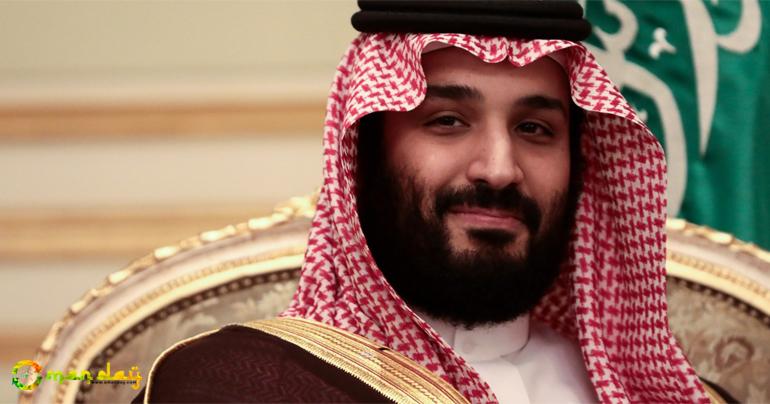
Saudi Arabia Crown Prince Says His Country ’’Not Normal’’
Saudi Arabia's powerful crown prince, Mohammed bin Salman, isn't just consolidating power before his probable ascent to the throne. He's also trying to remake Saudi society. He bluntly told reporters that his country is "not normal." And so, like Ataturk in post-World War I Turkey, the shah in pre-revolutionary Iran, and other authoritarian movers and shakers, he's going to modernize his society - and fast.
McKinsey's consultants helped design Vision 2030, the prince's sweeping reform agenda aimed at ushering Saudi Arabia into a more open, post-petroleum future. Reforms underway emphasize a vibrant private sector, a smaller bureaucracy, curbs on the power of the Wahhabi religious establishment and even the reopening of shuttered cinemas. The crown prince has vowed to restore a more "moderate Islam." No wonder the international community, despite some lingering unease about Mohammed's power grab and disillusionment with his disastrous war in Yemen, generally applauds all this social engineering. Thomas Friedman called it "Saudi Arabia's Arab Spring, at last."
But social engineering is a tricky business, and the outcomes are uncertain. Ataturk succeeded in his equally dramatic efforts to remake Turkey along avowedly Western lines. In Iran, on the other hand, the shah's decadence and modernizing failures triggered a radical backlash that culminated in the Islamic revolution. As it happens, something very similar to the prince's project has already been tried - next door, in the United Arab Emirates (UAE). What leaders there learned was that a top-down social revolution can't work by fiat; it requires a profound investment in the people whom it expects to change.
Although Saudi Arabia and the UAE have important differences, they share many of the same social and economic challenges. Both are oil monarchies overwhelmingly dependent on resource wealth; both have socially conservative citizenries and large youth populations in need of jobs. They both face notoriously rigid "rentier" social contracts typical of the Persian Gulf, in which citizens expect government positions in exchange for their acceptance of the authoritarian status quo. But ruling elites decided that the UAE needed to become a more globalized society before the oil ran out, and in 2010, they released their own bold and strikingly similar plan: Vision 2021. Beginning in 2009, I spent six years studying this effort and tracking its progress.
UAE rulers began, as in Saudi Arabia, with high-profile initiatives promoting knowledge, culture and innovation. For example, to spur the new economy, the UAE built Masdar City, which aims to be the world's first carbon-neutral metropolis, designed to create an ecosystem around renewable energy involving research, innovation, education and product development. Mohammed is developing the city of Neom, which translates roughly as "new future," with a robotics theme and similarly grand aims. On the social front, the UAE appointed a minister of state for tolerance, while the Saudis have the new Center for Moderation. World-class megacities, museums and universities feature heavily in both countries' social-engineering efforts. The centerpiece in the UAE is the man-made Saadiyat Island, which houses the new Zayed National Museum, a New York University satellite campus, and branches of the Louvre and the Guggenheim.
The problem is that authoritarian modernizers cannot simply command a new attitude among their citizens. Opening cinemas and relaxing gender segregation may impress Saudi youth, but a new economy requires far more. Reformers in the UAE eventually realized - as Saudi rulers will discover, too - that they needed to adapt both the mind-sets and the skill sets of the rising generation. In countries where people see a government job as a right, that means reshaping the very nature of citizenship.
Soon after their reforms began, UAE leaders found that few Emiratis were gaining interest in private-sector employment, and most continued to expect jobs in the unsustainable oil-fueled public sector. So they turned to much deeper social engineering to build "globalization-ready" citizens through major reforms to public education, starting with kindergarten. These involve what critics of Arab education systems have long demanded: a student-centered approach that focuses on skills mastery, creativity and problem-solving over the rote memorization of the past. The alterations shrink the emphasis on religion and double down on science, technology, business, and vocational skills such as in IT and health care. Importantly, they also promote attitudes such as civic-mindedness, tolerance and entrepreneurialism: New curricula, for instance, are designed to boost volunteerism, community service, respect for diversity and love of country with engaging lessons and hands-on activities. The school calendar is packed with events like the Festival of Thinkers, the Summer of Semiconductors and the Young Entrepreneurs Competition, a nationwide business contest held at the landmark Dubai Mall. Teachers also report successful role-playing in which students have a disagreement and then practice what it means to be tolerant.
Is this deeper process of building globalization-ready citizens working? To find out, I surveyed more than 2,000 Emirati youth, comparing incoming and outgoing cohorts in regular public schools - i.e., the old system - with incoming and outgoing cohorts in public schools that have implemented the new program. This methodology, called "difference in differences," is useful because it helps to isolate the effects of social engineering from other forces such as income disparities or maturation. I also interviewed hundreds of ruling elites, education reformers, parents, students, school administrators and teachers, and conducted several focus groups in the schools (in Arabic or English, as students sometimes preferred).
...[ Continue to next page ]
tag: blog , information
Share This Post