
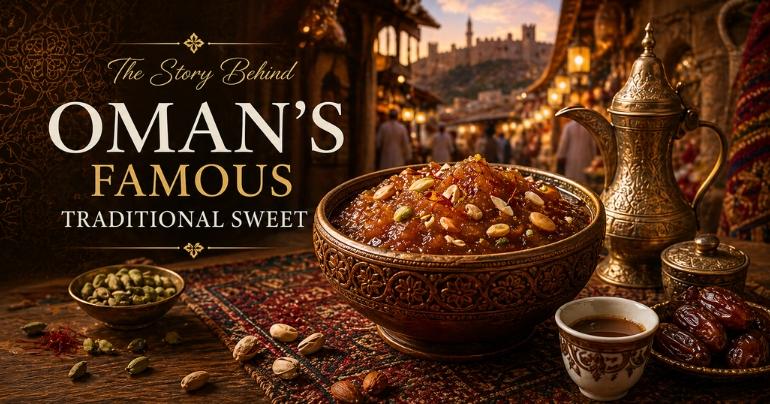
The Story Behind Oman’s Famous Traditional Sweet
Nothing captures the true essence of Omani hospitality quite like a warm bowl of traditional halwa.
Omani halwa represents Oman’s most iconic traditional sweet. This glossy dessert symbolizes hospitality, religious celebration, and deep family pride. Our culinary team explored local souqs and interviewed master confectioners today.
We want to bring you this authentic and comprehensive cultural guide.
What Exactly is Omani Halwa?

The Arabic word halwa simply means sweet. However, Omanis use this word to describe a specific national dessert. Cooks create this thick treat using sugar, starch, rich ghee, and fragrant rose water.
They also add spicy cardamom, premium saffron, and crunchy nuts. The mixture sets into a beautiful jelly-like texture over several hours. Locals almost always serve this dessert with spiced Omani coffee and fresh dates.
No major celebration or family gathering feels complete without it. Food experts urge every tourist to try this amazing national treasure.
Tracing Centuries of Culinary Evolution
Omani halwa developed its own unique character over many centuries. Oman’s powerful maritime role in Indian Ocean trade shaped this dessert significantly. Traders brought exotic saffron, cardamom, and nuts from distant lands.
Local farmers contributed fragrant rose water from the Jabal Akhdar mountains. Generations of families passed these precious secret recipes down carefully. Modern writers associate this sweet treat with ancient cultural heritage.
Traditional formulas relied heavily on white sugar, ghee, and basic spices. Today, modern chefs incorporate brown sugar, rich honey, and fresh dates. These exciting new variations satisfy changing modern tastes perfectly.
A Powerful Symbol of Generosity

Omani halwa acts as a powerful social signal across the country. Families buy large quantities during Ramadan and Eid festivals. They exchange these beautifully packaged sweets as heartfelt holiday gifts.
Hosts serve this dessert at weddings, graduations, and even somber funerals. A small bowl signals deep respect and generosity for visiting guests. Premium brands present their sweets in beautifully carved wooden or metal bowls.
You can store high-quality halwa at room temperature for several months. This long shelf life makes it the perfect tourist souvenir.
Crafting the Perfect Glossy Texture

Specialist families and dedicated factories manage this labor-intensive cooking process. Cooks heat the ingredients inside a massive copper pot called a mirjnl. They stir the mixture constantly by hand using long wooden paddles.
This intense stirring prevents sticking and develops the signature glossy texture. Traditional makers create black halwa using heavily caramelized sugar. They also craft yellow halwa using plain sugar and bright saffron.
Artisanal factories now offer special varieties featuring figs, honey, or tahini. Master confectioners learn to judge the perfect balance of sweetness and spice.
15 Best Places to Taste Authentic Omani Halwa

We curated fifteen amazing locations where tourists can taste this authentic dessert. Prices generally range from 2 to 10 Omani Rials per kilogram today in 2026.
1. Mutrah Souq Food Section
Explore this famous old market in Muscat for an incredible culinary adventure. Vendors sell beautiful ornate packages of traditional brown sugar halwa here.
2. Mutrah Fish Market Food Souq
Visit the stalls right next to the busy Muttrah fish market. You can sample fresh local sweets alongside traditional Omani coffee.
3. Al Diwaniya Sweets (Al Batinah)
This renowned confectionery brand operates a very popular branch in Al Khuwair. They offer elegant gift packaging for their famous traditional sweets.
4. Al Diwaniya Sweets (Al Khoud and Al Azaiba)
The brand runs additional branches in western Muscat to serve more customers. Tourists love buying their consistent, high-quality boxed halwa sets.
5. Al Hosni Omani Sweets (Al Khoud Flagship)
Ali bin Suleiman Al Hosni started his famous sweet business in the 1950s. His flagship store uses premium Jabal Akhdar rose water and Iranian saffron.
6. Al Hosni Omani Sweets (Al Azaiba)
This Muscat branch serves signature halwa inside beautiful carved wooden bowls. Both locals and international tourists visit this highly rated shop daily.
7. Al Hosni Omani Sweets (Salalah)
Travelers visiting southern Oman can enjoy this famous brand in Dhofar. The Salalah branch brings premium northern recipes to the southern coast.
8. Al Hadidi Omani Halwa (Ghubrah)
This brand experiences massive customer demand during weddings and Eid celebrations. They create delicious modern varieties using fresh honey and brown sugar.
9. Al Hadidi Omani Halwa (Al Koudh)
Travelers staying in the western suburbs can easily visit this convenient branch. The shop offers exciting modern takes on traditional dessert recipes.
10. Seeb Souq Halwa Stalls
Travel experts highly recommend visiting the busy Seeb Souq in Muscat. You can buy authentic sweets directly from various traditional market stalls.
11. Al Khuwair Souq Vendors
This accessible capital location hosts many traditional shops. Local residents visit these authentic sweet vendors daily.
12. Barka Factory for Omani Halwa
This famous factory sits directly on the busy Muscat-Sohar highway. They operate 24 hours daily and offer fig, honey, and milk varieties.
13. Nizwa Souq Stalls
Nizwa hosts a beautiful historic market filled with local shops and food. Visitors buy incredible traditional sweets alongside aromatic spices and handicrafts.
14. Al Saifi Halwa Shop (Nizwa Market)
Locals consider Al Saifi one of the absolute best sweet makers today. Expect very long customer queues at this historic shop during Eid.
15. Halwa Al Saifi (Muscat City View Building)
This modern Bausher boutique beautifully mixes deep tradition with modern design. Delivery trucks bring fresh sweets directly from the main Nizwa factory daily.
Make Traditional Halwa in Your Kitchen
You can recreate this beautiful Omani tradition in your own home. Use this simple home-style recipe to impress your family today.

Essential Ingredients
-
Buy one cup of tapioca flour or cornstarch.
-
Keep three-quarters of a cup of water for the flour.
-
Measure exactly two cups of white or brown sugar.
-
Set aside two cups of water for your sugar syrup.
-
Scoop one tablespoon of rich clarified butter or ghee.
-
Soak a pinch of saffron in warm water.
-
Add one tablespoon of fragrant rose water.
-
Grind one-quarter teaspoon of fresh cardamom.
-
Roast one tablespoon of sesame seeds.
-
Chop one-quarter cup of roasted cashews and almonds.
Cooking Method
-
Whisk the tapioca flour and water until completely smooth.
-
Stir your saffron, cardamom, and rose water into the flour mixture.
-
Toast the cashews and almonds gently using a non-stick pan.
-
Boil the sugar and two cups of water to create a syrup.
-
Pour the spiced flour mixture into the hot syrup slowly.
-
Stir the mixture constantly on low heat for twenty minutes.
-
Add the roasted nuts and sesame seeds as the mixture thickens.
Download the recipe card here:
-
Transfer the glossy sweets into lightly greased small bowls quickly.
-
Serve the warm dessert alongside traditional Omani coffee.
Pro Cooking Tips
Constant stirring prevents annoying lumps and stops the mixture from burning. High-quality rose water and saffron define the true character of the dessert. The final texture should feel firm and slightly bouncy.
Check out our life section to discover more authentic Omani dessert recipes!
tag: omani-halwa , traditional-sweets , oman-culture , muscat-tourism , halwa-recipe , barka-factory , oman-day-lifestyle
Share This Post