
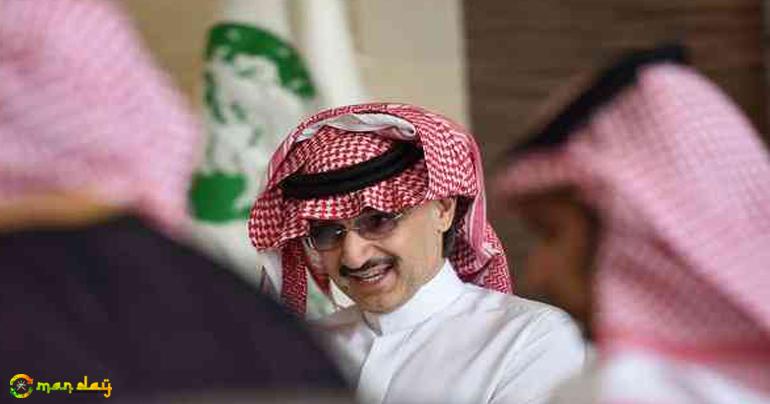
A Prince’s Uncertain Fate Deepens Mystery in Saudi Arabia
It has been more than three weeks since Prince Alwaleed bin Talal, the most prominent investor in Saudi Arabia, was arrested on a Saturday night as part of the sweeping detention of several dozen elites. Since then, he has been holed up inside the Saudi version of prison for the ultrawealthy: the Ritz Carlton hotel in Riyadh, about a 10-minute drive from the prince’s home.
He hasn’t been heard from, nor have any charges against him been made public.
Because he was the longtime public face of finance for Saudi Arabia, Prince Alwaleed’s arrest — and the lack of transparency around what has happened to him — is causing increasing consternation among his various business partners and in much of the Western business community.
His arrest has also created a sense of uncertainty among investors about whether to do business with Saudi Arabia and, by extension, could affect some of its partners, like Masayoshi Son’s $100 billion SoftBank fund, in which the kingdom holds a 45 percent stake. It could also affect the highly anticipated public offering of the state-owned oil company, Aramco, planned for next year.
“I’m surprised that he got swept up in this, because he had always been such a positive figure both in reality and symbolically for Saudi progressivism — for participating in the modern world, in modern finance,” said Richard Parsons, a former chief executive of Time Warner and former chairman of Citigroup, in which the prince had also been a large investor.
“What is this all about?’’ Mr. Parsons added. “There is no transparency. Nobody understands what is going on. It is unclear why or what the rationale is. If you’re an investor or a businessperson, you’re going to take a step back from the starting line and say, ‘I’m just going to keep my money in my pocket.’”
Many of the prince’s longtime partners have sought information about him, but have not been able to learn about his well-being or the charges against him. The Murdoch family, which has long had a relationship with the prince — he has been a large investor in 21st Century Fox, which in turn has a nearly 20 percent stake in Rotana, the media company he controls — has tried to find out more about his situation but has been stymied.
Known as the Warren Buffett of the Middle East, the prince has worked with Bill Gates on various projects, including their ownership of the Four Seasons resorts and several philanthropic endeavors.
“I’m only aware of what I’ve read in the press, and I can’t speculate,” Mr. Gates, Microsoft’s co-founder, said by email. “Prince Alwaleed has been an important partner in my foundation’s work to ensure that kids around the world receive lifesaving vaccinations. We’ve worked together to help stop the spread of polio, measles and other preventable diseases. His commitment to philanthropy is inspiring.”
The Saudi Arabian government has officially described the arrest of Prince Alwaleed and dozens of other princes and businessmen as part of a long-planned “anticorruption” effort. Inside the kingdom, the arrests were welcomed by many, especially by millennials, who think their job prospects and economic growth have been slowed by a culture of graft.
But outside the country, questions remain. The arrests have been called everything from a power grab by the crown prince, to a shakedown, to a Saudi version of “the Saturday Night Massacre.”
The country’s crown prince, Mohammed bin Salman has waved off those descriptions, calling them “ludicrous” in an interview last week with my colleague Thomas L. Friedman.
Still, the kingdom expects to reach “settlements” with those who have been arrested, and the crown prince said he expected to recover $100 billion. It remains unclear where those who reach settlements will go after leaving the Ritz; some are expected to remain living in Saudi Arabia while others may leave the country.
The timing of the arrests has also raised questions, coming just a week after the kingdom hosted a week long conference at the Ritz Carlton that drew some of the world’s most prominent investors. When the conference ended, there appeared to be a remarkable sense of good will toward the country, and several large investors said they intended to invest money there.
...[ Continue to next page ]
tag: blog , information
Share This Post